
The Alabama Materials Institute gives its deep appreciation to the following individuals who provide an external consultatory committee to AMI’s leadership. This board provides assistance and guidance towards AMI’s efforts as a leading academic-based, interdisciplinary materials research organization for faculty, staff, students, and its stakeholders.
Internal Board Members

Dr. Gregory Thompson
Distinguished University Research Professor and Executive Director of the Alabama Materials Institute
Professor Gregory Thompson joined the Department of Metallurgical & Materials Engineering at The University of Alabama as an Assistant Professor in 2003. He was tenured and promoted to Associate Professor in 2008 and promoted to Professor in 2012. In 2018, he was appointed Distinguished Research Professor for the UA system. He served for more than a decade as the Director for the Interdisciplinary Materials Science PhD program housed in the UA Graduate School, where he quadrupled the enrollment to over forty students during his administrative tenure.
He is now the founding Executive Director for the Alabama Materials Institute (2023), one of four university-wide strategic research investment areas, with nearly 90 affiliated faculty across twelve different departments. The institute has eleven full-time staff members and maintains user facilities in analytical instrumentation as well as powder processing and additive manufacturing in support of materials characterization and fabrication research.
Professor Thompson has published nearly 300 peer-reviewed articles in his research areas of analytical microscopy and phase transformations and has graduated 16 M.S. and 29 Ph.D. students to date. He received his Ph.D. (2003) and M.S. (1998) in Materials Science & Engineering from The Ohio State University, and a B.S. (1996) in Physics from Brigham Young University. Between his M.S. and Ph.D., he worked as a processing coating engineer.
He was awarded UA’s Blackmon-Moody Outstanding Professor of the Year in 2014, the TMS Brimacombe medalist in 2017, and became a Fellow of the International Field Emission Society (atom probe tomography) in 2025.

Dr. Klaus van Benthem
Professor, Metallurgical and Materials Engineering, Alabama Materials Institute
Klaus van Benthem’s expertise is in the field of materials defects and interface sciences, including grain boundaries ceramic microstructures and metal/ceramic interface. He carries out a diverse range of research projects to achieve a fundamental mechanistic understanding of materials phenomena in extreme environments that are commonly rooted in their microstructure. He uses a variety of (aberration-corrected) electron microscopy and related tools to characterize atomic scale defect structures and their evolution under externally applied stress fields.
His research group is known for rigorous, detail-oriented, and quantitative analyses of experimental data in close collaboration with theory. In addition to his world renown expertise in microstructure characterization, his research groups is also gaining strength in ceramic processing, including diffusion bonding and field-assisted sintering/annealing. Research projects include electric field-induced modifications of grain boundaries and grain growth behavior, wetting-dewetting transitions at metal/ceramic interfaces, and the design of electrolytic etch-stop mechanisms at semiconductor interfaces.

Dr. Jared Allred
Associate Professor, University of Alabama
Dr. Allred is a researcher specializing in the discovery and characterization of inorganic materials with functional properties. He earned his Ph.D. from Princeton University in 2012 and his B.S. from Case Western Reserve University in 2007, followed by a postdoctoral appointment at Argonne National Laboratory from 2012 to 2015.
His research focuses on understanding the relationship between atomic structure, chemical bonding, and the magnetic and electronic properties of solid-state materials. Using advanced X-ray and neutron diffraction techniques, Dr. Allred investigates materials at both the atomic and microscopic levels to inform the development of new materials with desirable functional properties. His work emphasizes magnetic and multiferroic materials, with potential applications in emerging energy, information, and sensor technologies.

Dr. Marco Bonizzoni
Associate Professor, University of Alabama
Dr. Marco Bonizzoni's research program operates at the intersection of functional materials and chemical sensing. Moving beyond traditional lock-and-key chemical receptors, his group engineers cross-reactive macromolecular and nanoscale arrays of chemical sensors paired with multivariate pattern recognition to identify chemicals in complex mixtures in aqueous environments. Key materials thrusts include utilizing fluorescent polymers, dendrimers, polyelectrolytes, and macrocyclic hosts to study non-covalent, multivalent binding and intermolecular forces. These functional material assemblies enable ultrasensitive, nanomolar-level detection of environmental pollutants, including heavy metals in seawater, polycyclic aromatic hydrocarbons, and azo dyes, as well as biological and public safety targets like antibiotics, metabolic carboxylates, and organophosphates. Recently expanding into electrochemical methods, the lab also investigates population heterogeneity in metal nanoparticles to build electrochemical sensing platforms.

Dr. James Shogren-Harris
Associate Professor, University of Alabama
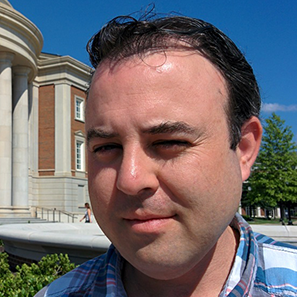
James W. Harris is an Associate Professor in the Department of Chemical and Biological Engineering. He received a B.S. in Chemical Engineering from the University of Virginia (2012) and a Ph.D. in Chemical Engineering from Purdue University (2017). His research group studies the responsible use of energy carriers for producing fuels and chemicals, focusing on catalysis over metal surfaces whose properties evolve with their environment and over sites confined within zeolite pores. Harris received the NSF CAREER Award in 2024 and the ACS Petroleum Research Fund Doctoral New Investigator Award, and was named a “Pioneer of Catalysis and Reaction Engineering” by the AIChE CRE Division. In 2025, he received UA’s President’s Faculty Research Award, Early Career Research Excellence & Innovation Award, and Faculty Excellence in Professional Service Award. His other honors include the Oak Ridge Associated Universities Ralph E. Powe Award. His group’s research is supported by NSF, DOE, DoD, the ACS Petroleum Research Fund, and the Aviation Climate Taskforce. Harris serves on the Early Career Editorial Boards of Journal of Catalysis and Microporous and Mesoporous Materials, the editorial board of Applied Catalysis B: Environment and Energy, and is a past president of the Southeastern Catalysis Society.
Dr. Alberto Perez-Huerta
Professor, University of Alabama
Dr. Alberto Perez-Huerta is a Professor of Geobiomineralogy at the University of Alabama. He joined the faculty of the Department of Geological Sciences at UA in 2009 after doing a postdoctoral research stay at the University of Glasgow (Scotland), and obtaining a Ph.D. in Paleontology at the University of Oregon and a B.S. degree in Geology at the Universidad de Oviedo (Spain). His main research is the field of biomineralization – a set of processes used by organisms to form minerals – using fossils and modern organisms, including the study of human bone and teeth, for applications in paleoclimatology, (paleo-)ecology, evolutionary studies, materials science, and medicine. Dr. Perez-Huerta has also research experience in the fields of mineralogy, geochemistry, and in the development of techniques for mineral characterization including pioneering work in the use of atom probe tomography (APT) for geological applications and electron backscatter diffraction (EBSD) for biomineral characterization.

Dr. Kim Lackey
Associate Professor and Optical Analysis Facility Coordinator, University of Alabama
Dr. Kim Lackey is an Associate Professor and Coordinator in the Optical Analysis Facility at the University of Alabama. A two-time UA graduate, she brings a unique perspective to teaching and mentoring, having progressed from undergraduate student to faculty member within the institution. Her career combines science education, microscopy, research support, and community engagement. Dr. Lackey is passionate about making science accessible and engaging through education, mentorship, collaboration, and public outreach, while fostering a deeper appreciation for biology and scientific discovery.
Dr. Lackey oversees advanced light and electron microscopy resources, training undergraduate and graduate students, consulting on interdisciplinary research projects, and supporting faculty across a wide range of scientific disciplines. Her expertise includes microscopy techniques, imaging technologies, instrumentation management, and research collaborations. She has co-authored more than 20 peer-reviewed research publications.

Dr. Kun Lu
Associate Professor, University of Alabama
Ken Lu is an Information Scientist specializing in applied natural language processing, large language models, and text mining. His expertise includes a range of text analytics methods, including rule-based, dictionary-based, and machine-learning approaches, as well as emerging developments in large language models. He collaborates with domain specialists across fields such as materials science, health, education, and the humanities to apply these technologies to complex information challenges and support scientific discovery.

Dr. Jason Bara
Distinguished University Research Professor, Co-Director of POLY-SM Center, University of Alabama
Dr. Jason Bara is a researcher specializing in the development of advanced polymer materials, clean energy technologies, and sustainable chemical processes. He earned his Ph.D. in Chemical Engineering from the University of Colorado Boulder in 2007 and his B.S. from Virginia Commonwealth University in 2002.
Bara is recognized for his work designing and synthesizing advanced polymers and composites based on ionic liquids, with applications in gas separation, water purification, 3-D printing, and self-healing materials. His research also focuses on developing high-performance solvents for capturing carbon dioxide and sulfur dioxide from industrial processes, as well as sustainable solvents derived from renewable resources. Several technologies developed by his group have advanced to commercialization and large-scale pilot demonstrations. In addition to his materials and chemical engineering research, Bara has developed several widely used engineering and scientific applications for iPhones and iPads.

Mr. Michael Malley
Director of AMP Research & Development, University of Alabama
Mike Malley is Director of Research & Development at the Alabama Mobility & Power (AMP) Center at The University of Alabama. He oversees AMP’s Battery Research Lab and Power Research Center, which house a pouch cell pilot line, advanced materials characterization, battery testing, and a megawatt-class microgrid. Mike leads AMP’s grant and sponsored research strategy and directs its industry partnerships and commercialization efforts. He also leads the development of AMP’s workforce programs in battery manufacturing and energy systems.

Dr. Paulo Araujo
Associate Professor, University of Alabama
Dr. Paulo Araujo is an Associate Professor in the Department of Physics and Astronomy at the University of Alabama. He was previously a postdoctoral researcher at the Massachusetts Institute of Technology (MIT), where he worked under the supervision of Professor Mildred Dresselhaus. He received his Ph.D. in Physics from the Federal University of Minas Gerais, Brazil, under the supervision of Professor Ado Jorio. His research focuses on the development and application of far- and near-field optical spectroscopic techniques, including absorption, photoluminescence, Raman spectroscopy, and spectropolarimetry, to investigate the optical properties of molecules, polymeric systems, and low-dimensional solid-state materials.

Dr. Samit Roy
William D. Jordan Professor of Aerospace Engineering and Mechanics, University of Alabama
Dr. Samit Roy received his Ph.D. in Engineering Science & Mechanics from Virginia Tech in Blacksburg, Virginia. He is currently the William D. Jordan Endowed Professor in the Department of Aerospace Engineering and Mechanics at University of Alabama (UA). Dr. Roy's research interest is directed towards multi-scale modeling and life-prediction of fiber reinforced polymer composites and structural adhesives subjected to aggressive environmental conditions. He is also involved in additive manufacturing and application of AI in composites for structural self-healing. He is an Associate Fellow of the AIAA, Fellow of ASME, and Fellow of ASC. He is the recipient of the ASC Outstanding Researcher Award in Composites in 2019 and ASC/DesTech Award in Composites in 2023.

Dr. Mark Weaver
Professor and Associate Department Head for Undergraduate Studies, ChBE Affiliate Faculty, Adjunct Professor of Mechanical Engineering, Director of the TriCampus Materials Science PhD Program, University of Alabama
Dr. Mark Weaver is a researcher specializing in the microstructural characterization and mechanical behavior of advanced materials. He earned his Ph.D. and M.S. in Materials Science and Engineering from the University of Florida in 1995 and 1992, respectively, and his B.S. in Metallurgical Engineering from the University of Washington in 1989.
His research focuses on understanding the relationship between the microstructure and properties of materials, with an emphasis on high-temperature oxidation and corrosion, mechanical behavior, and advanced characterization techniques. Current research includes the development of protective coatings for high-temperature applications, deformation and fracture behavior of structural alloys, and phase transformations in high-temperature shape memory alloys, intermetallic compounds, and high-entropy alloys. His work also investigates oxidation behavior and high-rate deformation mechanisms in advanced alloys.

Dr. Gregory Kubacki
Associate Professor, Associate Director of the Center for Advanced Manufacturing and Materials Design Integration, University of Alabama
Dr. Gregory Kubacki is a researcher specializing in the corrosion behavior and performance of structural and biomedical alloys. He earned his Ph.D. in Bioengineering from Clemson University in 2018 and his B.S. in Chemical Engineering from Virginia Tech in 2013.
His research focuses on understanding how material structure and processing methods influence corrosion, particularly in alloys produced through advanced manufacturing techniques such as laser-based and solid-state additive manufacturing. He also investigates how local environmental conditions affect passivity and electrochemical processes on metal surfaces to better understand corrosion initiation and predict long-term material performance. Before joining the University of Alabama, Kubacki served as a postdoctoral research associate at the University of Virginia’s Center for Electrochemical Science and Engineering, where he studied atmospheric corrosion of aluminum alloys.
External Board Members

Professor Babu, Sudarsanam (Suresh) Babu
Clark Distinguished Chair, Professor, Materials Science and Engineering, University of Maryland Robotics Center
Professor Suresh Babu has more than 30 years of experience in advanced manufacturing, joining sciences, additive manufacturing, physical metallurgy, and computational materials modeling. He has published more than 250 journal papers and numerous conference proceedings in these areas. Dr. Babu obtained his bachelor’s degree in metallurgical engineering from PSG College of Technology, Coimbatore, India, and his master’s degree in industrial welding metallurgy-materials joining from Indian Institute of Technology, Madras. He earned his PhD in materials science and metallurgy from University of Cambridge, UK in 1992. Professor Babu has held research and/or professor appointments at the Institute for Materials Research (Sendai, Japan), Edison Welding Institute (Columbus, Ohio), Oak Ridge National Laboratory (ORNL), University of Tennessee (UT), Pennsylvania State University (PSU), and The Ohio State University. In 2020, Professor Babu was appointed to the National Science Board by the President of the United States of America for a six-year term. And, in 2022, Professor Babu was appointed into the inaugural senior advisor for research and STEM to the Provost and Vice Chancellor of Research at UT. Throughout his career, he has received many recognitions for his technical leadership and service to the materials and manufacturing community. He is a fellow of AAAS, ASM International, AWS and SME.

Mr. Michael Johns
Senior Vice President, Kratos SRE
Michael David Johns was named Senior Vice President of Kratos SRE in 2022; a new entity formed after leading a successful transaction of the Engineering Division of Southern Research Institute to the San Diego based Kratos Defense and Securities Solutions, Inc. Prior to that, he served as the Vice President of the Engineering Division of Southern Research Institute since 2004. Mr. Johns has directed and managed high-profile research and commercial projects in the advanced aerospace materials sector and currently leads teams of researchers working in electromechanical systems and integration, hypersonic and ballistic missile systems, materials engineering, automotive engineering, nuclear engineering, artificial intelligence and machine learning, directed energy, advanced manufacturing, cybersecurity, and computational sciences. Mr. Johns received his bachelor’s degree, magna cum laude, in mechanical engineering from The University of Alabama, and he received a Master in Business Administration from UA. In 2009, he became a distinguished engineering fellow at UA. He is an active member on various boards including the engineering leadership boards of UA and the University of Alabama at Birmingham and the president’s council at the University of Alabama at Huntsville. He also serves on the NASA National Advisory Council and chairs the Technology Innovation and Engineering Committee of the NAC. Mr. Johns was named Engineer of the Year by the Engineering Council of Birmingham in 2016 and was inducted into the Alabama Engineering Hall of Fame in 2020 where he also now serves on the Board of Directors for the Hall of Fame.

Mr. Timothy N. McKechnie
President of Plasma Processes LLC.
Plasma Processes was founded by Mr. McKechnie in 1993 and is a state-of-the-art fabrication center specializing in ultra-high temperature materials, coatings, and propulsion components using additive manufacturing and thermal spray processes including High Pressure Cold Spray, Vacuum Plasma Spray, plasma spray, HVOF, and electro-deposition. In addition he orchestrated the purchase of the EL-Formâ Technology from the Engelhart Corporation and the successful installation, expansion, and productionizing of the process at Plasma Processes which now averages 10,000 parts per month using this technology. Collectively, these coatings and structures produced by Plasma Processes are routinely integrated into a variety of aerospace, nuclear, medical, industrial and commercial applications meeting ISO 9001 and AS9100 standards. Mr. McKechnie was previously the Lead Engineer for Rocketdyne Division of Rockwell International in Thermal Spray for use on the Space Shuttle Main Engines. He has a Master of Science degree in Material Science and Engineering and Bachelor of Engineering degree in Mechanical and Materials Engineering from Vanderbilt University. Mr. McKechnie has 40 years of experience in fabrication of high temperature materials for propulsion and other extreme environments where he has written or been co-author of over 60 technical publications. He is an ASM International Fellow.

Mr. John Vickers
Director, Digital Twin Core Facility, Louisiana State University
John Vickers served as NASA's Principal Technologist for Advanced Manufacturing in the Space Technology Mission Directorate at NASA Headquarters, where he provided agency-wide leadership for critical technologies at the intersection of NASA and commercial space. In addition, he was the senior leader for advanced manufacturing at NASA's Marshall Space Flight Center and the principal steward of the agency's advanced manufacturing technical capabilities. He was the Associate Director of the Marshall Materials and Processes Laboratory and the Director of NASA's National Center for Advanced Manufacturing. He also led the Agency's Digital Twin research and development strategy to push the technological boundaries and accelerate its early adoption.
Mr. Vickers represented NASA on several key national committees and initiatives. He served on the National Science and Technology Council's Subcommittee on Advanced Manufacturing, which develops the National Strategic Plan for Advanced Manufacturing, as well as the Subcommittee on Critical Minerals and the Digital Twins R&D Committee. He also served on the Advanced Manufacturing National Program Office interagency team, supporting the Manufacturing USA Program.
Mr. Vickers has over 40 years of experience in materials and manufacturing related research and development, engineering, and production for propulsion, spacecraft, and scientific systems. Today, his personal research interests include the digital twins approach as a technology to transform the nature of work, the workforce, and workplace. He is a Fellow of SME and an Associate Fellow of the American Institute of Aeronautics and Astronautics (AIAA).